Downtown Phoenix has become a recognizable setting for independent musicians, dancers, and other performers. During First Fridays, visitors may encounter a guitarist playing near an art gallery, a violinist entertaining pedestrians, or a magician attracting a small crowd. These performances contribute to the city’s cultural atmosphere, but they also raise questions about sidewalks, business entrances, noise, and permission.
Yes, street performing is generally legal in Phoenix, Arizona. Musicians and other performers can ordinarily perform in public rights-of-way without obtaining a general busking permit. However, performers must comply with applicable noise ordinances, pedestrian access requirements, property restrictions, and event regulations.
The distinction between a spontaneous sidewalk performance and an organized commercial event is particularly important.
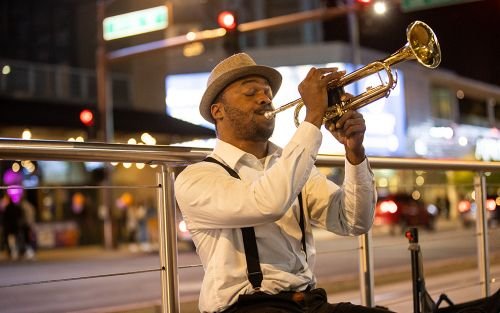
Phoenix Recognizes Busking as a Permitted Public Activity
Street performing, commonly called busking, involves entertaining people in public spaces. Performers may play music, dance, sing, recite poetry, or present other artistic performances.
Phoenix does not impose a general permit requirement on individuals simply for performing in a public right-of-way.
The city’s Downtown Arts Vending on Private Property Pilot Program expressly recognizes that busking in public rights-of-way is allowed without a permit.
This means that ordinary street performers generally do not need special city authorization merely to present their work on a public sidewalk.
Examples of typical busking activities include:
- Acoustic music: Playing guitar, violin, or another instrument for passing pedestrians.
- Singing: Performing live vocals without creating an unreasonable noise disturbance.
- Dance: Presenting short routines in an appropriate public location.
- Magic and comedy: Entertaining voluntary audiences without blocking public access.
- Spoken-word performances: Reciting poetry or presenting other expressive material.
However, permission to perform does not automatically authorize commercial sales, street closures, or exclusive use of public property.
First Fridays: Why Performing and Vending Have Different Rules
Phoenix’s First Fridays arts events provide a useful example of how the city distinguishes artistic expression from commercial activity.
In September 2026, Phoenix began accepting applications for its Downtown Arts Vending on Private Property Pilot Program.
The program changes where participating vendors may operate during First Fridays. Under its rules, qualifying vending activities must take place on approved private property rather than public sidewalks or streets.
Street performers are treated differently.
The city’s guidance establishes that:
- Busking in public rights-of-way remains permitted without a general performance permit.
- The pilot program does not impose additional restrictions on ordinary busking.
- Vendors participating in the program must operate within approved private-property boundaries.
- Commercial sales may require separate authorization.
- Street closures are not permitted as part of the revised First Fridays vending arrangement.
A musician playing for pedestrians is therefore not automatically subject to the same permitting rules as someone operating a merchandise booth.
Sidewalk Access Matters More Than Audience Size
A successful performance may attract dozens of people, but a growing audience can create practical problems.
Phoenix sidewalks must remain usable by pedestrians, including people with disabilities.
A performer should not assume that public space becomes reserved for a performance simply because an audience has gathered.
Important considerations include:
- Keeping building entrances and exits accessible.
- Avoiding obstruction of pedestrian pathways.
- Leaving accessible ramps and crossings unobstructed.
- Preventing equipment from creating tripping hazards.
- Maintaining access for emergency personnel.
- Respecting temporary restrictions associated with permitted events.
The performance itself may be lawful while the placement of equipment or crowd creates a separate violation.
Can Street Performers Use Amplifiers in Phoenix?
Amplified music presents a different legal question from an ordinary acoustic performance.
Phoenix City Code Sections 23-12 through 23-14 regulate unreasonably loud, disturbing, and unnecessary noise.
These provisions apply to music and sound-producing equipment in appropriate circumstances.
Performers should consider:
- Volume: Sound that substantially disturbs nearby businesses or residents may violate the ordinance.
- Duration: Continuous amplified performances can create greater disturbance than brief musical sets.
- Location: A speaker near an office entrance may affect surrounding occupants.
- Time: The ordinance specifically addresses disturbing music between 11:00 p.m. and 7:00 a.m.
- Event conditions: Organized events may have additional restrictions on amplification.
Using a portable amplifier does not automatically make a street performance unlawful. The relevant issue is whether the sound violates applicable rules.
Is Collecting Tips Legal for Phoenix Street Performers?
Voluntary contributions are a traditional part of busking.
A performer may place an instrument case or another suitable container nearby so appreciative listeners can offer tips.
However, accepting voluntary contributions should be distinguished from selling merchandise or operating a commercial business.
The legal considerations differ:
- Voluntary tips: Generally associated with ordinary street performance.
- Selling merchandise: May trigger vending or other commercial requirements.
- Charging admission: Could change how an activity is classified.
- Operating a booth: May require authorization depending on the location.
- Soliciting aggressively: Conduct that violates applicable public safety or solicitation laws may create separate legal concerns.
A performer who intends to sell recordings, artwork, or other products should verify the rules governing that activity rather than assuming busking permission covers sales.
Private Property Requires a Different Approach
Public sidewalks and privately owned shopping centers are not legally interchangeable.
A performer who wants to use a restaurant patio, business courtyard, shopping center, or privately owned plaza generally needs appropriate authorization from the property owner or operator.
Property owners may establish lawful conditions involving:
- Performance hours and scheduling.
- Placement of musical equipment.
- Amplified sound.
- Customer and pedestrian access.
- Commercial activity and merchandise sales.
Remaining on private property after permission has been withdrawn may also raise trespassing concerns under Arizona law.
Organized Concerts May Require Permits
Phoenix distinguishes individual street performances from larger events that reserve or substantially alter public spaces.
A planned concert, festival, or organized gathering may require city approval when it involves street closures, public park facilities, large crowds, or temporary event infrastructure.
Depending on the activity, organizers may need:
- Special event authorization.
- Approval to use city park property.
- Street or sidewalk closure permits.
- Fire safety and assembly approvals.
- Permission for temporary stages or other installations.
These requirements should not be confused with a general busking permit, which ordinary sidewalk performers do not typically need.
Frequently Asked Questions
Q1. Do street performers need a permit in Phoenix?
A: Generally, no. Phoenix expressly allows ordinary busking in public rights-of-way without a general performance permit. Larger organized events, commercial vending, and activities requiring reserved public space may need separate approvals.
Q2. Is playing guitar on a Phoenix sidewalk legal?
A: Yes, generally. Acoustic guitar performances are ordinarily permitted on public sidewalks when performers comply with applicable noise, pedestrian access, and public safety rules.
Q3. Can buskers accept money from pedestrians in Phoenix?
A: Voluntary tips are generally compatible with ordinary street performing. However, selling merchandise, charging admission, or operating a commercial vending activity may involve additional requirements.
Q4. Are street performances allowed during Phoenix First Fridays?
A: Yes. Phoenix’s Downtown Arts Vending on Private Property Pilot Program expressly allows busking in public rights-of-way without a permit. The program’s private-property vending restrictions do not impose an additional general permit requirement on street performers.
Q5. Can police stop a street performance in Phoenix?
A: Police may intervene when a performance violates applicable laws, such as noise restrictions, obstruction requirements, or other public safety regulations. Street performing itself is generally lawful, and enforcement must respect applicable constitutional protections for artistic expression.